Francis Fonseca The Record

Enquiries — Mr. Digant Sharma

+91 9769999960

im@digantsharma.com

Journey

Thirty-eight years,
told in sequence

Every stage below is dated from the public record and answers the same four questions: what happened, where, why it mattered, and what changed afterwards. Open any entry for the detail behind it.

Chronology

Scroll the chronology horizontally
1988 Lafayette, Louisiana

An economics degree, taken with honours

Fonseca completed a Bachelor of Science in economics with honours at the University of Louisiana at Lafayette, then known as the University of Southwestern Louisiana.

Why it mattered
What changed
It set the order of his training. He would practise as an economist for two years before he began to study law, and the analytical framing has stayed with the policy work ever since.
1989 SPEAR, Belize

Research officer on Belizean development

His first post on returning home was as a research officer at the Society for the Promotion of Education and Research, from 1989 to 1990, followed by a year as an economist in the Ministry of Economic Development from 1990.

Why it mattered
Context
SPEAR was among the country's principal independent policy research bodies. The post placed him in the evidence-gathering side of Belizean public policy years before he had any part in making it.
What changed
He entered the civil service next, as an economist in the Ministry of Economic Development — his first position inside government.
1994 The University of the West Indies

Law, and then the Norman Manley Law School

He took an LL.B. with honours from The University of the West Indies in 1994, and his Certificate of Legal Education at the Norman Manley Law School in Jamaica in 1996 — the qualification that admits a Commonwealth Caribbean graduate to practise.

Why it mattered
What changed
It made him eligible for the Attorney General's office he would hold a decade later, and gave him the second of the two professional identities — economist and attorney-at-law — that define his public description to this day.
1996 Office of the DPP, Belize

Crown Counsel, then private practice

He served as Crown Counsel in the Office of the Director of Public Prosecutions from 1996 to 1997, prosecuting on behalf of the Crown, then moved into private practice as an attorney-at-law from 1997 to 2000.

Why it mattered
Alongside
Between 1997 and 2000 he joined the executive of the Bar Association of Belize, the board of the Belize Council for the Visually Impaired, the YMCA as a director, the Central Bank of Belize as a director, and in 1999 the board of the University of Belize.
What changed
Within three years of qualifying he sat on the boards of the country's central bank and its national university — the institutional standing that made the next step possible.
2000 Office of the Prime Minister

Chief of Staff at the centre of government

Appointed Chief of Staff in the Office of the Prime Minister under Said Musa, a post he held until 2002 — the coordinating role at the top of the executive, held without an electoral mandate of his own.

Why it mattered
Why it mattered
It gave him a working view of the whole of government before he had responsibility for any single part of it.
What changed
He left the post to stand for election, converting an official career into an elected one.
2003 Freetown, Belize City

Elected, and given the education ministry

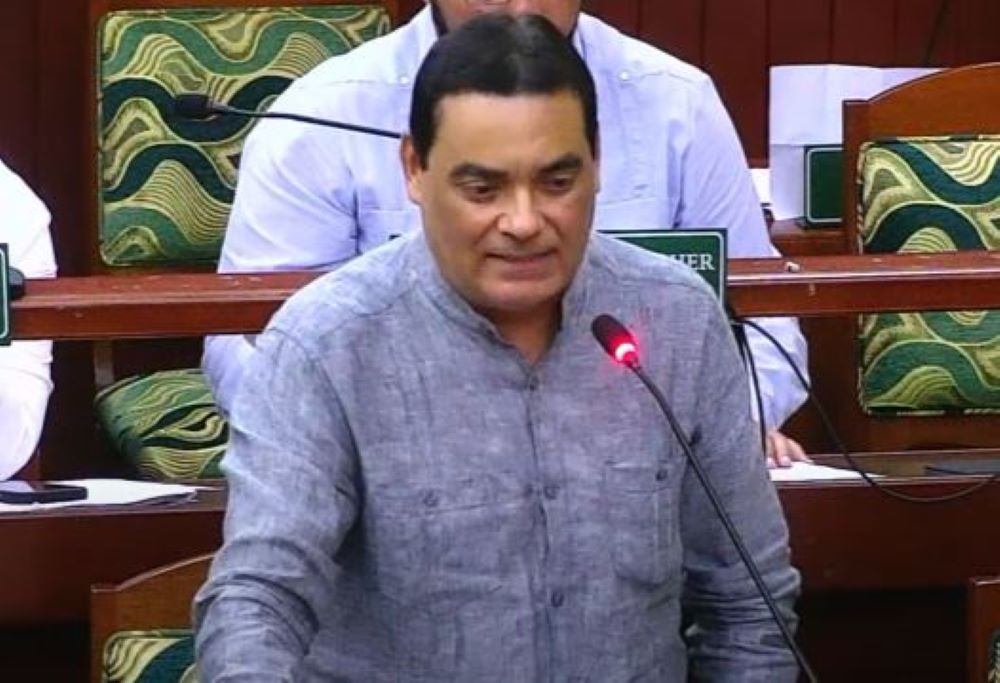
On 5 March 2003 Fonseca won Freetown with 1,154 votes to the United Democratic Party's Doug Singh on 771, succeeding Jorge Espat. He was appointed Minister of Education, Youth, Sports, Culture and Labour, and became Chairman of the People's United Party.

Francis Fonseca speaking at a microphone from the benches of the National Assembly of Belize.
Plate 08 On his feet in the National Assembly of Belize.
Context and consequence
The seat
Freetown hugs the Caribbean shoreline on the north-west outskirts of Belize City. Created in the 1961 redistricting, it was George Cadle Price's seat from 1961 to 1984, Derek Aikman's from 1984 to 1993, and Jorge Espat's from 1993 to 2003.
What changed
He has held it ever since — six general elections, six wins.
2005 Attorney General's Ministry

Attorney General alongside education

In 2005 he took the Attorney General's portfolio, holding the state's principal legal office together with the education ministry until the government fell in 2008.

Why it mattered
Why it mattered
Very few Belizean ministers have combined the Attorney General's office with a service ministry. It is the clearest expression of the two halves of his training being used at once.
2008 Freetown

Fourteen votes, and a leadership contest lost

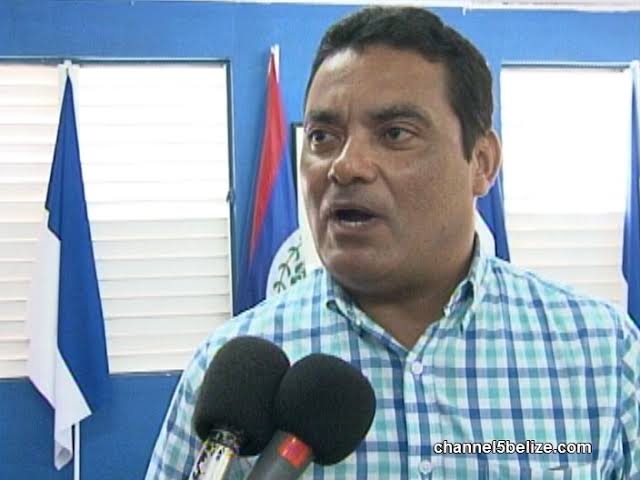
The PUP was heavily defeated. Fonseca held Freetown by fourteen votes — 1,369 to Michael Peyrefitte's 1,353 — one of only six PUP representatives in the country to keep a seat. In March that year he contested the party leadership and lost to Johnny Briceño, 310 votes to 330.

Francis Fonseca answering a broadcast interviewer's question in a party office, the flag of Belize behind him.
Plate 09 Answering a broadcast interview in a party office.
What changed afterwards
What changed
It was the narrowest result of his career, and the closest he has come to leaving public life. Every subsequent contest in Freetown has been won by a wider margin than the one before.
2011 National Assembly, Belmopan

Party Leader and Leader of the Opposition

On 3 November 2011 Fonseca became Leader of the People's United Party and Leader of the Opposition, taking the leadership on his second attempt and only months before a general election.

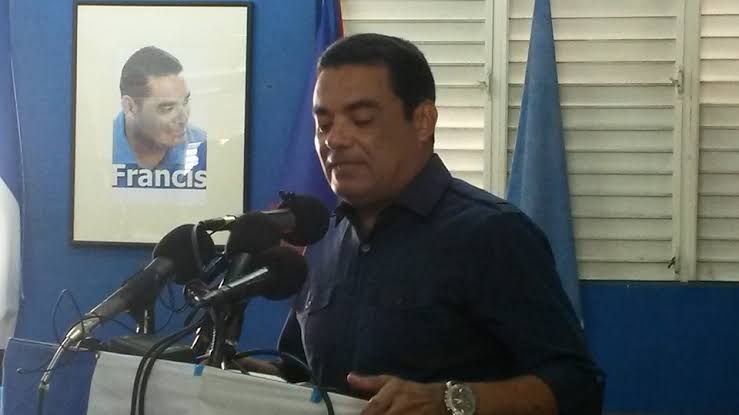
Francis Fonseca speaking from a lectern banked with microphones, a framed campaign portrait captioned Francis on the wall behind him.
Plate 10 At a lectern banked with microphones, a framed campaign portrait on the wall behind.
Context and consequence
Context
He inherited a party that had lost office heavily in 2008 and had months rather than years to prepare for the next contest.
What changed
He led it into the March 2012 general election and came within a working majority of government: seventeen seats to fourteen.
2012 Nationwide

A general election narrowly lost

The March 2012 general election returned the United Democratic Party to government by seventeen seats to fourteen. Fonseca held Freetown with 1,558 votes to Lee Mark Chang's 1,408.

Why it mattered
Why it mattered
It was the closest the PUP came to office in the twelve years between 2008 and 2020, and it kept him at the head of the party for a further four years.
2016 People's United Party

Standing down as leader

Following the party's defeat at the November 2015 general election — at which he increased his own Freetown vote to 1,777 against Carla Barnett's 1,312 — Fonseca announced he would step down. A national convention was set for 31 January 2016 to choose his successor.

What changed afterwards
What changed
He returned to the back benches having led the party for four years and three months, and remained the representative for Freetown throughout. The leadership passed to Johnny Briceño, under whom he would return to Cabinet four years later.
2020 Ministry of Education, Belmopan

Back to Cabinet, back to education

The PUP won the November 2020 general election. Fonseca took Freetown with 2,114 votes to Orson Elrington's 959 and was appointed Minister of Education, Culture, Science and Technology — the file he had left twelve years earlier.

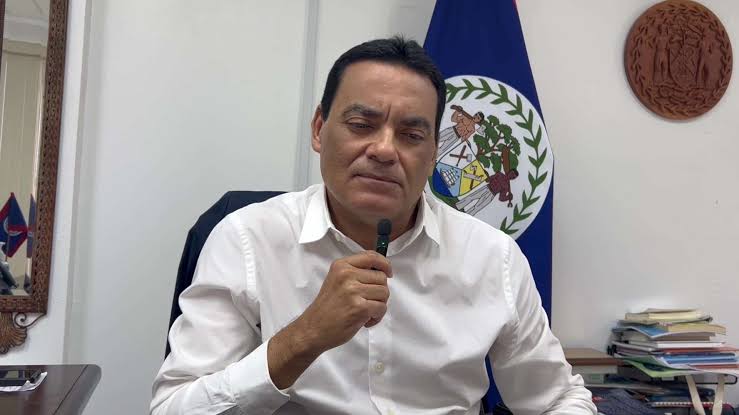
Francis Fonseca speaking into a handheld microphone at his office desk, the flag of Belize and a carved coat of arms behind him.
Plate 11 Ministerial remarks from the office desk, beneath a carved coat of arms.
What followed
What changed
Cabinet endorsed the Belize Education Sector Plan 2021–2025, built on four strategic priorities: reforming the system of education, transforming teaching and learning, prioritising underserved sectors, and maximising human capital.
Then
A new national curriculum framework followed, based on competency- and project-based learning.
2022 Southside Belize City

The Education Upliftment Project begins

In the 2022/23 academic year the Belize Education Upliftment Project — Together We Rise — opened at four government secondary schools on the southside of Belize City, covering 947 students, with tuition and fees removed entirely.

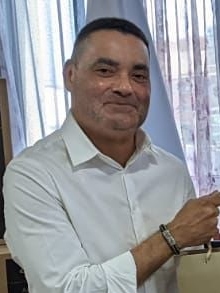
Portrait of Francis Fonseca in a white shirt beside a window, photographed in 2022.
Plate 12 Photographed in 2022, the year the Upliftment Project opened.
How it grew
2023/24
Five further schools in the southern region joined.
2024/25
Twelve more secondary institutions were added nationwide, taking the project to roughly seventeen schools — close to half the country's secondary school population.
2024 Belmopan and New York

Foreign affairs added to the portfolio

On 1 January 2024 Fonseca took Foreign Affairs and Foreign Trade in addition to education, after Eamon Courtenay left Cabinet at the end of 2023. On 2 February the National Assembly passed the amendment raising the compulsory school age to sixteen. On 28 September he delivered Belize's statement to the 79th United Nations General Assembly.

Context and consequence
Context
Courtenay returned to private practice at Courtenay Coye LLP, having served the three years agreed with the Prime Minister on appointment; he retained oversight of Belize's two International Court of Justice cases.
What changed
Fonseca became the country's principal diplomatic voice at the point when its territorial question with Guatemala was moving through the ICJ.
2025 Freetown and Belmopan

A sixth term, and a portfolio reordered twice

At the general election of 12 March 2025 Fonseca was returned for Freetown for the sixth time with 2,164 votes. In the Cabinet announced on 15 March he was given Foreign Affairs, Foreign Trade, Culture and Immigration, with Oscar Requena taking Education. In the reshuffle effective 17 November he resumed the education portfolio alongside foreign affairs.

Where the record stands
Current office
Minister of Education, Foreign Affairs, Foreign Trade, Culture, Science and Technology, supported by two ministers of state.
In the same year
He signed a Memorandum of Cooperation on biometric data sharing with the United States Department of Homeland Security on 22 July, and a Safe Third Country agreement with the United States on 22 October.
2026 Ministry of Education

The second sector plan

The Belize Education Sector Plan 2.0 was launched to guide the sector from 2026 to 2030, against a reported education allocation of about $300 million for the fiscal year. Fonseca set out five core objectives, the first being equitable access and completion at every level of education.

What it commits to
School feeding
To be scaled up to reach 35,000 students by 2030.
Transport
280 bus runs currently carry more than 14,000 students and teachers at about $12 million a year, rising to 295 runs at about $12.5 million.
Inclusion
More than 2,000 teachers trained for classrooms with children of diverse abilities; some 20,000 children screened for special educational needs since 2021.

Next

The story, and then the evidence.

This page tells the sequence. The dossiers set out what each major contribution was intended to do, what it involved, what it cost and what it produced.

Open Work & Contributions