Takes a bachelor's degree in economics with honours, the training that underpins everything that follows.
Belize · Public Record Freetown Constituency · Since 2003
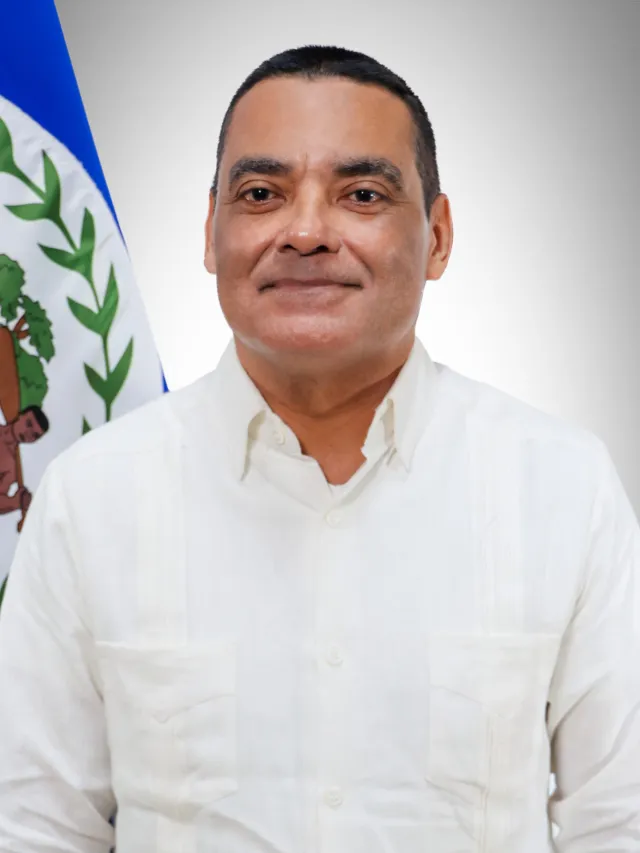
Francis Fonseca
Attorney-at-law and trained economist. Area Representative for Freetown since 2003 — the Belize City seat once held by George Cadle Price — and, since November 2025, Minister of Education, Foreign Affairs, Foreign Trade, Culture, Science and Technology.
Opening statement
A career built at the meeting point of law, economics and public instruction.
Francis William Fonseca was born in Belize City in 1967 and read economics before he read law. He took a bachelor's degree in economics with honours from the University of Louisiana at Lafayette in 1988, an LL.B. with honours from The University of the West Indies in 1994, and his Certificate of Legal Education from the Norman Manley Law School in Jamaica in 1996. That sequence — the economist first, the lawyer second — has shaped a public career unusually concerned with how policy is financed as well as how it is drafted.
His first posts were analytical rather than political: research officer at the Society for the Promotion of Education and Research from 1989, then economist in the Ministry of Economic Development from 1990. He returned from law school to serve as Crown Counsel in the Office of the Director of Public Prosecutions from 1996 to 1997, and then spent three years in private practice. By the end of the 1990s he was sitting on the boards of the Central Bank of Belize, the University of Belize, the Belize Council for the Visually Impaired and the YMCA.
Elected for Freetown on 5 March 2003, he has since held that seat at six consecutive general elections. In between he has been Attorney General, Chairman and then Leader of the People's United Party, Leader of the Opposition, and the minister responsible for Belize's schools and, latterly, for its foreign relations.
At a glance
The verified register.
- Full name
- Francis William Fonseca
- Born
- 1967, Belize City — then British Honduras
- Profession
- Attorney-at-law and economist
- Constituency
- Freetown, Belize CityHeld continuously since 5 March 2003; six general elections contested, six won.
- Current office
- Minister of Education, Foreign Affairs, Foreign Trade, Culture, Science and TechnologyPortfolio set at the Cabinet reshuffle effective 17 November 2025.
- Party
- People's United PartyChairman 2003–2008; Party Leader and Leader of the Opposition 3 November 2011 – 31 January 2016.
- Also served as
- Attorney General (2005–2008); Minister of Education, Youth, Sports, Culture and Labour (2003–2008); Chief of Staff, Office of the Prime Minister (2000–2002)
- Education
- St. John's College, Belize City · B.Sc. Economics (Hons), University of Louisiana at Lafayette, 1988 · LL.B. (Hons), The University of the West Indies, 1994 · Certificate of Legal Education, Norman Manley Law School, 1996
- Published
- Co-author, Social Studies Alive Workbook, 1997
The journey
Eight fixed points in a thirty-year public record.
Each entry is dated from the public record. The full chronology — with the circumstances, the consequences and what changed afterwards — is set out on the Journey page.
Called to practice; serves as Crown Counsel in the Office of the Director of Public Prosecutions.
Appointed Chief of Staff, moving from legal practice into the centre of government.
Elected on 5 March and appointed Minister of Education, Youth, Sports, Culture and Labour.
Takes the Attorney General's portfolio, holding it alongside education until 2008.
Becomes Leader of the People's United Party and Leader of the Opposition on 3 November.
Returns to Cabinet with the education, culture, science and technology portfolio.
Adds foreign affairs and foreign trade on 1 January, becoming Belize's principal diplomatic voice.
Defining contributions
Four things that changed while he held the file.
-
01
Free secondary education, school by school
The Belize Education Upliftment Project — Together We Rise — began in the 2022/23 school year at four government secondary schools on the southside of Belize City, covering 947 students. It removes tuition and fees outright and adds meals, uniforms, transport, learning devices and school repairs. By 2024/25 it had reached roughly seventeen schools and close to half the secondary school population.
-
02
Compulsory schooling raised to sixteen
On 2 February 2024 the National Assembly passed the Education and Training (Amendment) Act, lifting the compulsory school age from fourteen to sixteen. The ministry's own figures had put the national secondary net enrolment rate at 56.5 per cent in 2022; the amendment was the legal instrument behind the policy push to raise it.
-
03
Grant-aided school salaries onto the public purse
Announced on 7 December 2023 and effective from January 2024: government assumed 100 per cent of salaries, allowances, pensions and service benefits for staff at grant-aided secondary and tertiary institutions — 1,054 employees across 30 secondary schools and 8 tertiary institutions. It delivered Proposal 22 of the 2018 collective bargaining agreement with the teachers' unions.
-
04
Belize's argument on the world stage
Addressing the 79th session of the United Nations General Assembly on 28 September 2024, he set out a case built on a single principle — self-determination — and applied it to climate finance, small island statehood, Haiti, and Belize's own unresolved territorial question with Guatemala.
Context
The country the work was done in.
Belize is a small, English-speaking Central American state on the Caribbean coast, and almost every constraint on its public policy follows from that. It is a member of the Alliance of Small Island States, one of thirty-nine countries whose economies sit on the front line of the climate crisis while contributing a negligible share of global emissions. Its traditional sectors — agriculture, fisheries, tourism — are precisely the ones most exposed to a warming sea.
Its education system carries a parallel structural inheritance. A large share of Belize's secondary and tertiary schools are grant-aided: church- or community-owned, but publicly funded in part. That divided ownership had for decades left teachers' salaries, pensions and benefits split between government and school management, and it left families paying tuition at institutions that were, in practice, the only secondary schools available to them.
And Belize's sovereignty has never been formally settled. Guatemala maintains a territorial, insular and maritime claim over Belizean territory. Both countries agreed to put the question to the International Court of Justice, which is where it now sits — making the foreign ministry's file, unusually for a country of this size, a question of national existence rather than of trade alone.
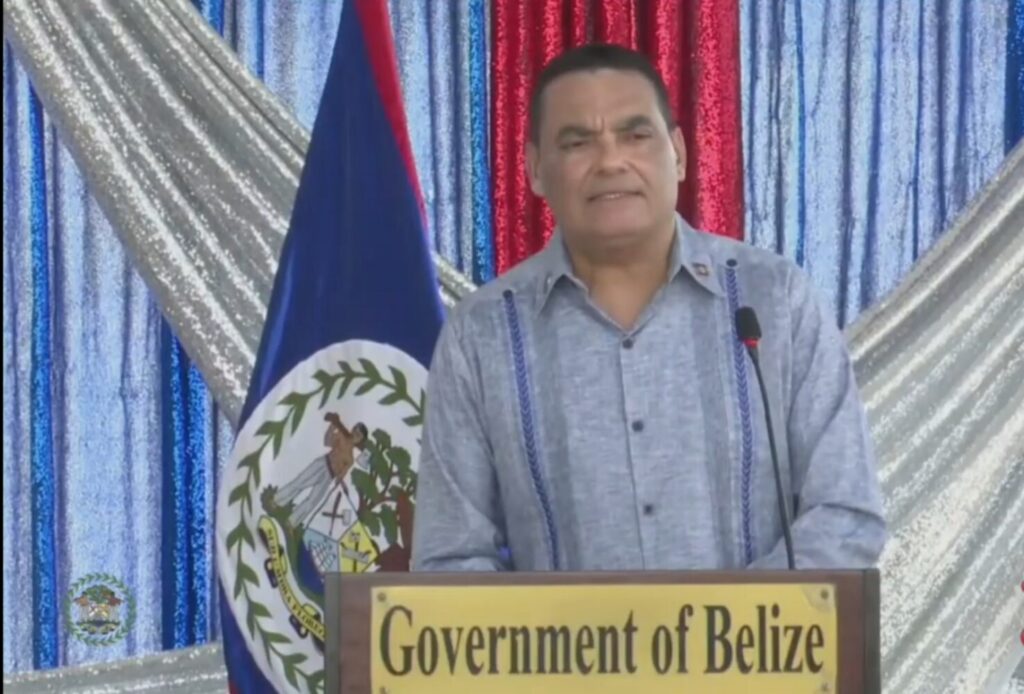
On the education budget
“We recognize that if we are going to grow and develop Belize, then we have to invest in
the education of our people.”
Scale of the file
Education has drawn roughly 23 per cent of Belize's national budget; the sector allocation for
the 2026 fiscal year was reported at about $300 million.
Closing statement
In his own words, before the General Assembly.
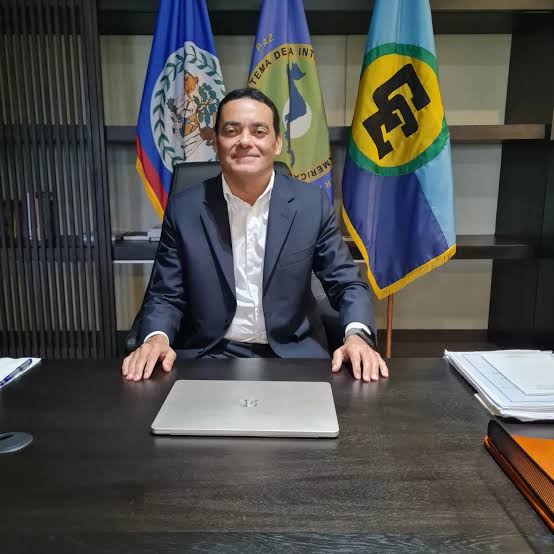
The youth of today have given us a clear, undeniable mandate. They demand action, accountability, and a future where they are heard, seen and respected. We ignore them at our own peril.
Francis Fonseca — Statement of Belize
79th Session of the United Nations General Assembly, New York, 28 September 2024